
How Dust, Not Rain, Is the Biggest Enemy of Wiper Blades in India
2/25/20262 min read
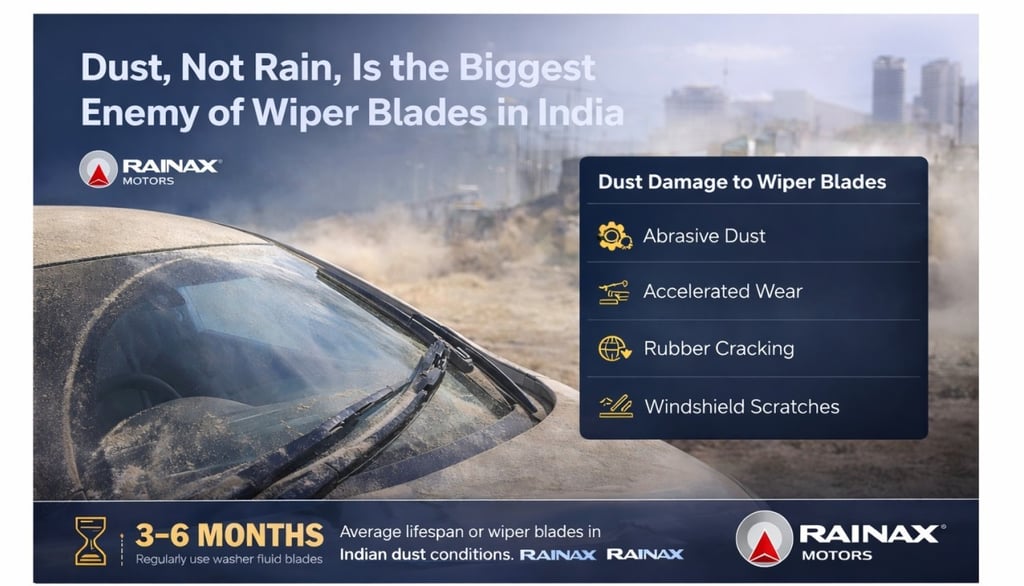
If you're driving in India, here's a reality check: your wiper blades aren't wearing out because of the monsoon. They're dying a slow death from something far more insidious—dust.
The Dust Dilemma
Most of us assume wiper blades are designed primarily for rain. That's true globally, but in India, the story is different. Our roads generate massive amounts of dust from construction, unpaved surfaces, and vehicular pollution. This fine, abrasive dust settles on windshields constantly, creating a grinding paste when wipers are activated.
Every time you turn on your wipers to clear dust—often without washer fluid—you're essentially running sandpaper across your windshield and blade edges. The rubber deteriorates faster, develops cracks, and loses its flexibility. Within months, what should be a smooth wipe becomes a streaky, chattering mess.
The Numbers Don't Lie
Consider this: Indian metros like Delhi and Mumbai record PM10 levels (particulate matter) that regularly exceed WHO guidelines by 3-5 times. During summer months, dust storms in northern regions create visibility hazards that force drivers to use wipers multiple times daily—not for rain, but for dust.
The average wiper blade globally lasts 18 - 24 months.
In India?
Expect 3-6 months at best, especially if you're driving in tier-2 or tier-3 cities with higher dust exposure.
What Makes It Worse
Dry wiping: Most Indian drivers activate wipers to clear dust without using washer fluid. This direct friction accelerates wear exponentially.
Quality concerns: The aftermarket is flooded with low-quality blades that can't withstand abrasive conditions. Cheap rubber compounds harden quickly under our climate.
Temperature extremes: India's summer heat (40-45°C) makes rubber brittle. Add dust to already-compromised blades, and degradation speeds up.
UV exposure: Prolonged sun exposure causes rubber oxidation. Combined with dust abrasion, it's a double whammy.
The Real Cost
Damaged wiper blades aren't just annoying—they're dangerous. Reduced visibility during sudden rain showers (which do come during monsoons) can lead to accidents. Additionally, worn blades can scratch windshields, leading to expensive replacements.
Smart Solutions
Always use washer fluid: Never dry-wipe dust. Keep your washer reservoir filled with quality cleaning fluid.
Invest in quality blades: Premium blades with harder rubber compounds and UV-resistant coatings last longer in Indian conditions you can definitely go for Rainax.
Regular cleaning: Wipe down blades weekly with a damp cloth to remove accumulated dust and grime.
Parking matters: Whenever possible, park in covered areas to minimize dust and sun exposure.
Season-specific replacement: Replace blades before monsoon season when visibility becomes critical.
The Bigger Picture
This isn't just about maintenance—it's about understanding regional challenges. Global automotive solutions don't always translate directly to Indian conditions. Whether you're in automotive manufacturing, aftermarket sales, or fleet management, recognizing that dust is the primary adversary helps in product development, inventory planning, and customer education.
The next time you see those streaks on your windshield, remember: it's probably not the rain that's to blame. It's the dust you drove through yesterday, last week, and every day in between.
Contact
Get in touch with us today.
enquiry@rainax24.info
+91 9310033339
Home
>
>
>
>
>
>
Quick Links
+91 9999901101
>